Transatlantic Crossing on the Queen Mary 2, May 2026
- Friday, 8 May 2026 (Day 1)
- Saturday, 9 May 2026 (Day 2)
- Sunday, 10 May 2026 (Day 3)
- Monday, 11 May 2026 (Day 4)
- Tuesday, 12 May 2026 (Day 5)
- Wednesday, 13 May 2026 (Day 6)
- Thursday, 14 May 2026 (Day 7)
- Friday, 15 May 2026 (Arrival)
During the years leading up to our retirement, my wife (“L” here) and I talked about our plans. We wanted to travel while we were able, and we each had destinations in mind. A return to Italy was on our list as well as a trip to Scotland, which neither of us had visited. We agreed to try to make at least one trip a year, and last year, we made the trip to Italy. In the meantime, L read an article on the transatlantic crossing of the Queen Mary 2, and she was intrigued by the thought of being in the middle of the Atlantic, with no land in sight and the stars unobscured by city lights. She suggested we sign on for the fall trip, but I balked because of conflicts with my rehearsal and performance schedule with the Delaware County Symphony and the Penn Baroque and Recorder Consort. We looked ahead to spring 2026, when there was a crossing scheduled for early May, the week after my spring concerts would be over.
L read several blog accounts by passengers on the ship and concluded that we should get a stateroom near the center of the ship. After looking at the options and the prices, we decided to go with the cheapest, and we booked our passage.
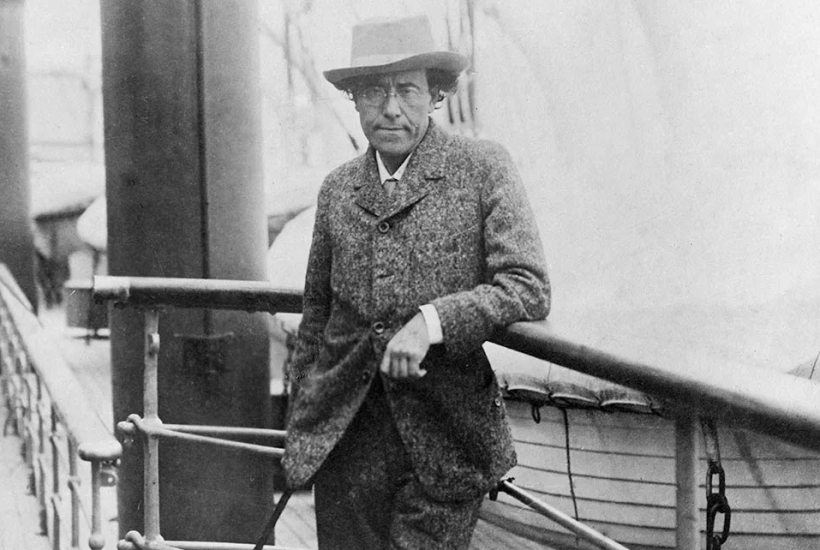
I was drawn by the romance of a transatlantic crossing. I’ve always loved the photos of Mahler standing on the deck of the SS Amerika as he sailed for the last time from New York to Hamburg in 1911. And during the past year, I had studied several transatlantic ship manifests to gather information on my great-aunt Isobel Griscom’s trips to Europe during the first half of the twentieth century. I looked forward to abundant time to read in the sun on the deck, and because the trip would take seven days, we would adjust to the time change gradually and avoid arriving in Europe in the usual fog from a sleepless night on a plane.
I mentioned our plans to an old friend.
“Do you have your tux ready?”
“What do you mean?”
“I have friends who went on a cruise like that, and they brought tuxes
with fancy ties to wear in the evening.”
“It’s not a cruise. It’s a transatlantic crossing. On a ship. We’ll be passengers.”
“Are there gala events where you’re expected to dress up?”
“Well, yes, but we aren’t doing that.”
“Sure. OK. Still, it’s a cruise.”
Strictly speaking, no, it wasn’t a cruise. It was a trip from one point to another with no stops between. Yet my friend was right. After we booked passage on the Queen Mary 2, I began receiving email from Cunard every week or two encouraging me to buy drink and entertainment packages. (I declined, knowing that if we bought drink passes, I’d end up overconsuming to justify the expense.) Most of the communication from Cunard was about enhancing the experience of the trip. The offerings made it clear there were elements that were identical to a cruise—the plentiful food and drink, the scheduled galas with evening dress codes, the dances and entertainment. We decided we’d do what we felt comfortable doing and ignore the rest.
What follows are notes I took during the course of our seven-day crossing in May 2026.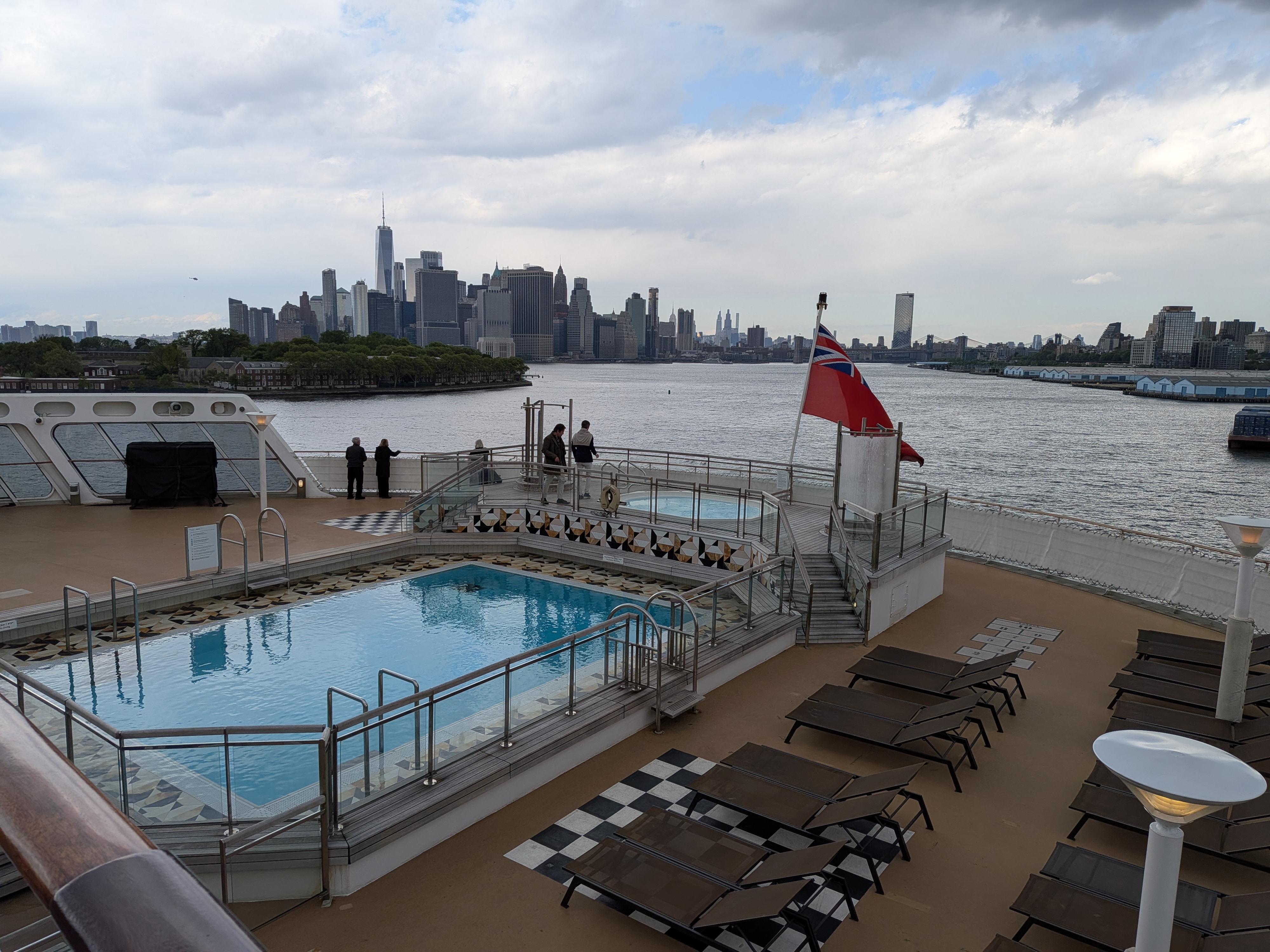
Friday, 8 May 2026 (Day 1)
Time Zone: UTC-4
Sunrise: 5:47 am
Sunset: 7:59 pm
Although we arrive at the Brooklyn Cruise Terminal in Red Hook (Brooklyn) fifteen minutes before the beginning of the embarkation window for the Queen Mary 2—and we were told not to arrive before then—there are already hundreds of people queued up in the check-in terminal. First we have to pass through a security checkpoint much like the TSA checkpoints at an airport, only they aren’t concerned about liquids. (I have a bottle of bourbon in my suitcase and a bottle of wine in my backpack and would be annoyed but not devastated if they were seized.) During the process of routing all our belongings through the X-ray machine, L somehow loses her paper boarding pass, and I call up the PDF on my phone and send her a screenshot. Beyond the security screening, we join a long, snaking line of hundreds of people waiting their turn with one of the twenty Cunard check-in agents arrayed across a counter fifty yards long. Off to the side, I see a man working in the terminal in a Buc-ee’s sweatshirt.
After forty-five minutes in line, we reach the front and are directed to agent 20, who checks our passports, UK ETA pass, and takes our photograph. We are free to board the ship. We walk for five minutes through the cavernous halls of the terminal until we reach the gangplank, which takes us up to deck 3 of the ship. We walk into an expansive lobby, and it feels as if we are entering an elegant hotel. To the right of the lobby, we queue up at a bank of elevators, not realizing we could easily have walked up the stairs around the corner to our stateroom on deck 4. Once on our deck, we are directed down a narrow hallway and, looking at each number as we pass, we reach 4105, our home for the next seven days. L selected this room because it was near the center of the ship, front to back, and would be less susceptible to the rocking of the sea. I try the door, and it’s locked, and we see no way to open it. As I head back down the hall to find a Cunard staff member, L calls to me. In an envelope behind the plaque displaying the room number are two keycards—our “cruise cards,” which unlock the door and will be used for all purchases on board.
We enter the stateroom. It is the size of a New York City hotel room, dominated by a king-sized bed in the center. From our balcony we can see Governor’s Island and the Statue of Liberty. A safety video playing in a loop on the TV tells us we should take our cruise cards to our designated gathering point on deck 7 to have them scanned. We make our way to deck 7, which is home to a series of buffet-style restaurants, already heavily populated with people sitting down to plates of free food before we even embark. Somewhere among these diners we find our Gathering Point F, but there are no staff or a device for scanning, so we continue our tour of deck 7 by exiting the central area and venturing out to the open-air deck, which circumnavigates the ship. We make a complete circuit (1/3 mile) and take in the views of Brooklyn, Manhattan, and Governor’s Island.
The ship leaves port at 5:40 pm, moving south. We cross paths with the Staten Island Ferry. Loud helicopters pass low over us. The weather is clear and warm, and if we weren’t committed to dinner at 6:00 pm, we would stay on the balcony. We walk down to deck 3 at 6:00 and enter the enormous Britannia Restaurant. We are seated at table 409, our assigned table for the week, and a waiter stops by with menus. Five minutes later, two of our tablemates are seated, and they introduce themselves: G and C (initials used throughout for privacy). L and I look at each other. My sister’s name is the same as G’s, and she is married to a C. I mention this and add that G was the name of my maternal grandmother. G says it is an old name not encountered much anymore, but we never learn how she came by it. We learn they live near New Haven, and I assume they are affiliated with Yale University. Not far into the conversation, I mention that I used to commute into Philadelphia to work at Penn, and my wife says she’s a retired physician. “And how about you?” she asks. G says that C is a journalist and she is an editor. As they continue talking, we learn that C isn’t simply a journalist: he’s a reporter for The New York Times, and G is an editor at Macmillan. Later that evening, when we’re back in our stateroom, it doesn’t take me long to find C online. I’d read an article by him a couple of weeks ago, and he’s written fifteen books.
Our conversation is easy, entertaining, and thoughtful. We discuss the dangers of AI, the impact of smartphones on mental health, and life during the pandemic. We continue talking throughout the dinner service and linger afterward. Following dinner, L and I take the elevator from deck 3 up to deck 11, then take stairs to deck 12. When we walk out into the open air, two dogs scurry around a corner, followed by owners at the end of their leashes. We are near the kennel, and some owners have their dogs out for evening exercise. We try to reenter the door we’d taken to the deck, but it is locked from the outside, and the only route we find back to the elevator is through the glass room encasing the swimming pool. We see a women asleep in one of the elevated hot tubs. We exit the pool area and walk down to deck 4. Back in our room, I uncork the bottle of wine from my backpack and have a glass. We shut off the lights at 10 pm, but a neighbor’s television keeps us awake (although it’s barely audible) until they shut it off at 11:30. The boat occasionally rocks during the night, and the ship’s engines rumble gently at a low pitch.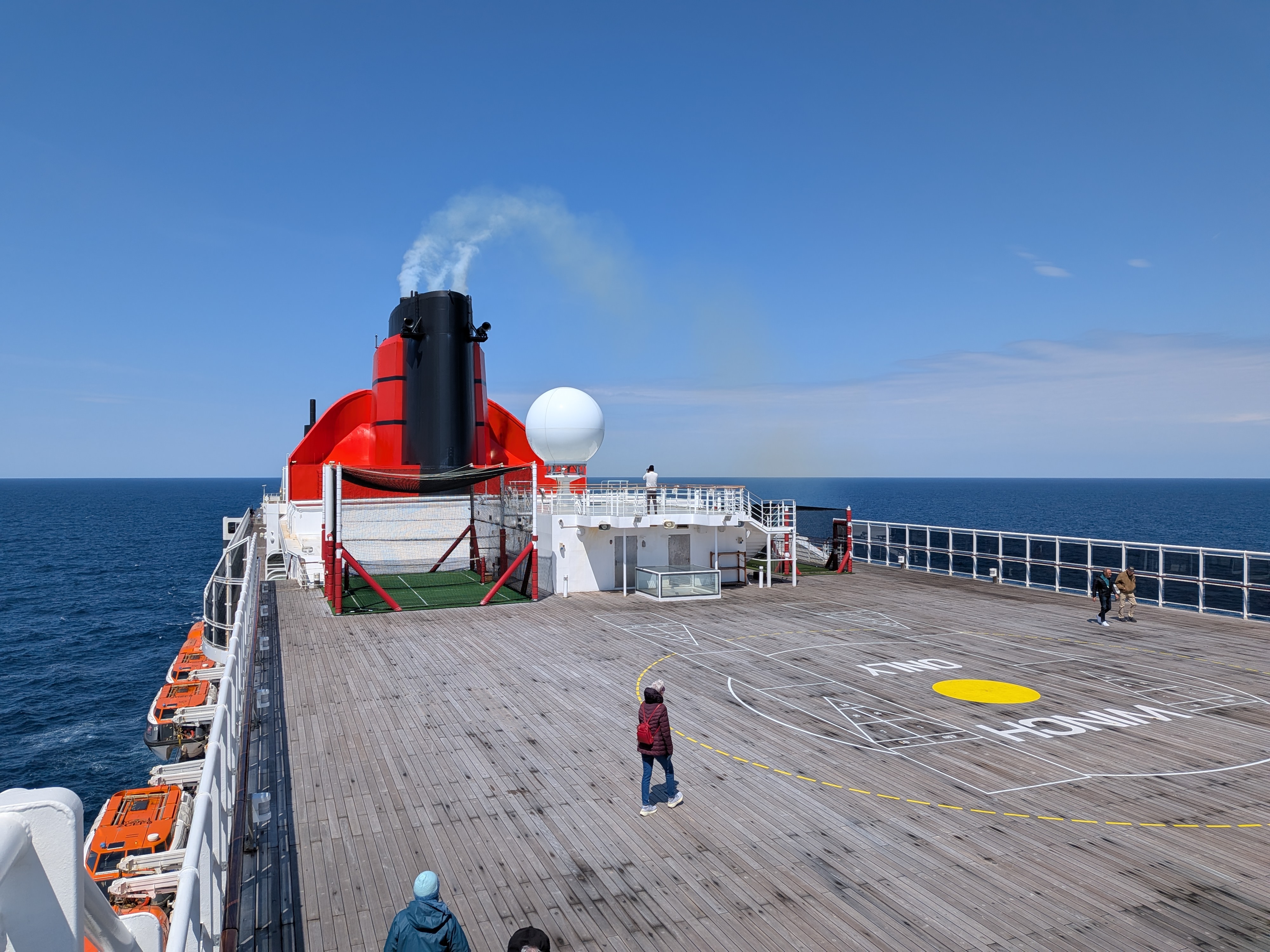
Saturday, 9 May 2026 (Day 2)
Time Zone: UTC-3
Sunrise: 5:27 am
Sunset: 8:16 pm
I’m wide awake at 5:00 am and fail to go back to sleep. Around 6:00 I decide to read, and I finish Stephen Downes’s authoritative but odd Gustav Mahler (2025). At 6:30, I doze and drift in and out of dreams until the alarm goes off at 7:00.
Breakfast is delivered to the room at 7:30. I have ordered the traditional English breakfast, which includes such oddities (for an American) as baked beans, black pudding, mushrooms, and a grilled tomato. The scrambled eggs are good, though wet. L has the Mediterranean frittata, which she proclaims “good,” but her vegetarian sausage, which appears to have been boiled rather than grilled, is “dreadful.”
Our plan for the morning is to stop by the library on deck 8, then walk to the top of the ship (deck 13) and work our way down, deck by deck. It’s our first time to the library, an elegantly appointed space with cherry bookcases, each lit from the inside. To the left are magazines and a seating area, and around the perimeter there are chairs in front of windows that look out onto the bow of the ship. Nearly all the seats are taken, and after a cursory survey of a few shelves, I see the collection is haphazardly organized into broad categories (travel, history, royalty, fiction, mystery) and roughly arranged alphabetically within each. Still, there are some interesting finds: a book describing one hundred albums to collect on LP, a collection of Zadie Smith short stories. When I’m in the middle of my browsing of the shelves, L finds me and says, “I’m ready to leave when you are.” I continue to look around and find a shelf of books in Italian, but they’re all popular fiction and not of interest. A few minutes later, I’m ready to leave. I check out my two books with the librarian and then roam the aisles in search of L. Nowhere. I go to the lobby, then the bookstore adjacent to the library. Not there.
I walk to the top of the ship and take photos, then return to the room and start reading Matrix by Lauren Groff. At 11:15, I leave a note on the door (“Left to search for you. Back by noon”) and walk around the ship’s lower decks. There is a dance class in a ballroom. I see a group of people huddled around a table in the casino. A surprisingly long line of people is queued up at the purser’s counter. At 11:15, I return to the room. My note is gone, and when I open the door, I see L sitting on the couch reading. We try to sort out what happened, but the imporant thing is we’re back together, and it’s time to think about lunch.
At noon, the ship’s clocks move up an hour, so it’s now 1:00 pm. I say I’m interested in a light lunch. Perhaps a salad. I suggest we go to the King’s Court, the upscale name for the multistation buffet with open seating on deck 7. By the time we get there, it’s already packed. We pass stations for Mexican food, sushi, vegan entrees, and an odd station with “battered sausage,” “battered fish,” and “chunky fries” (a domestic-violence crime scene), and a South Asian station. Before we’ve seen them all, L decides it’s too crowded. We next try the Carinthia Lounge, which is quieter, with plenty of open seats, but at the food counter, the shelves are empty, and it’s not clear how to order. L moves on impatiently. The next stop is the restaurant at the bottom of my list, the Boardwalk Cafe, a hot dog and hamburger joint on the top deck. We take the stairs and walk across the deck to the restaurant. After carefully studying the menu posted outside, we open the door, and it’s clear it’s not open and no one is preparing to open it. The kitchen is empty, and there’s no one in sight. (Why not post a CLOSED sign? Why not lock the door? These are the mysteries I was left to ponder.) We end up in the Britannia Restaurant—which in retrospect should have been our first choice—and we have a simple, small, elegant lunch. I have a small plate of antipasti and a spicy lentil-bean chili with a small scoop of rice.
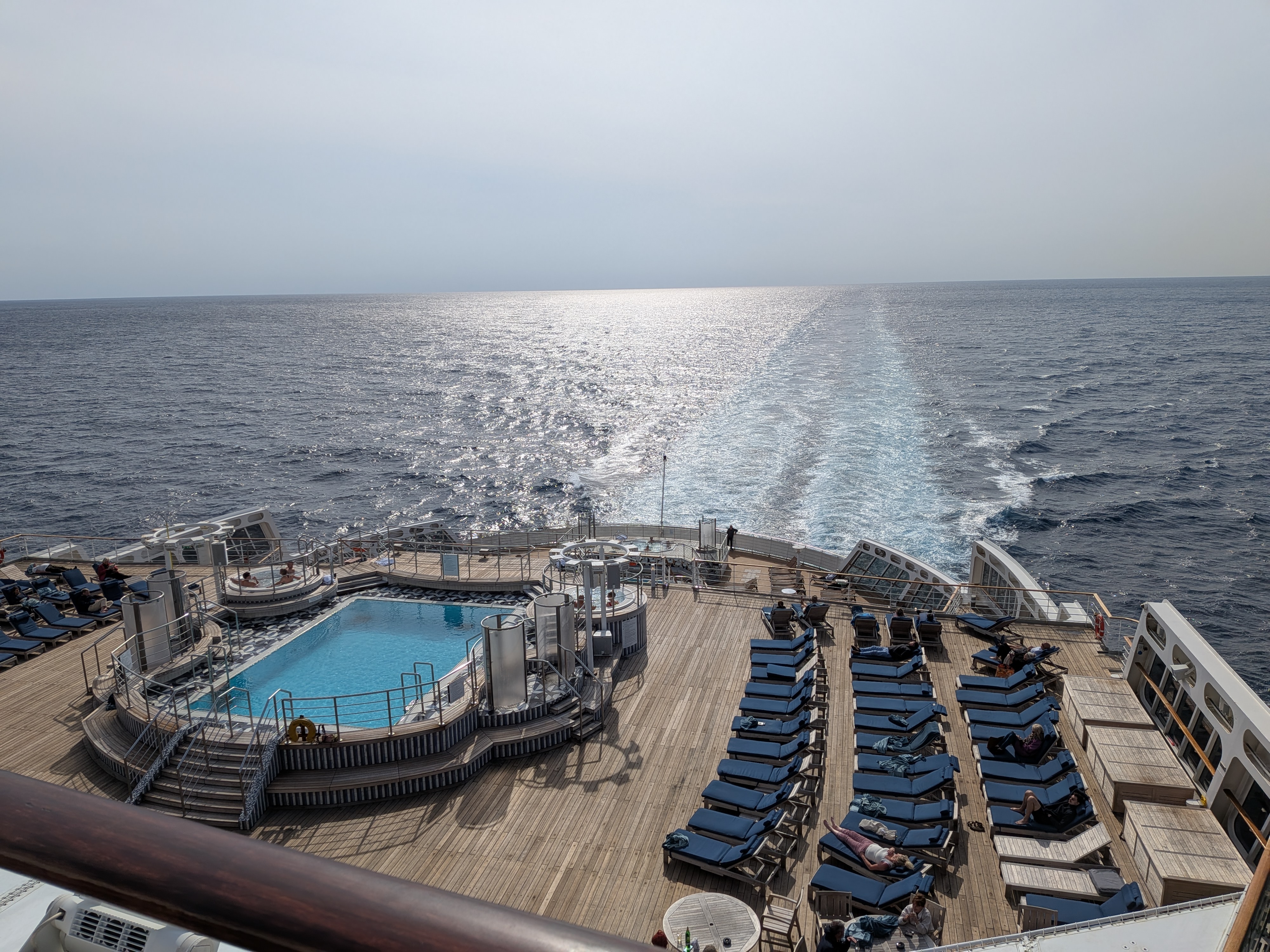
We spend the afternoon in the stateroom. I continue reading Matrix. While L takes a nap, I walk up to deck 12 and sit in one of the lounge chairs on the stern end of the ship on a deck overlooking the swimming pool. It is mostly sunny but cool and breezy.
C and G are back at our table for dinner, and the two seats that were empty last night are now filled by M and B, a talkative couple with prominent New York/New Jersey accents. When we arrive at the dessert course, B quickly grabs his phone, stands up, and walks to the side of the table as eight waitstaff fill in behind M and sing “Happy Birthday.” When the singers reach “Happy Birthday, dear . . .” one of the waitstaff flashes around to the other waiters a piece of paper with M’s name written on it.
Cruise ships are famous for enabling and promoting the consumption of food and drink. On this ocean liner, there are opportunities to eat too much, particularly at the bustling central buffet, and to drink in excess by purchasing one of the heavily marketed drink packages. We find that by sticking to the designated dining room we can count on being served meals consisting of small, elegantly prepared courses, and because we’re paying for the alcohol, we easily stick to one drink. Tonight I have an appetizer of two pieces of mackerel, followed by an Asian chicken soup and a fish schnitzel with a small scoop of mashed potatoes. Last night, I started with two salt-cod arancini, followed by a puréed bean and thyme soup and filet of sole. A sommelier stops by for wine service and applies no pressure when we decline. After dinner we explore the theater areas near the front of the ship on decks 2 and 3.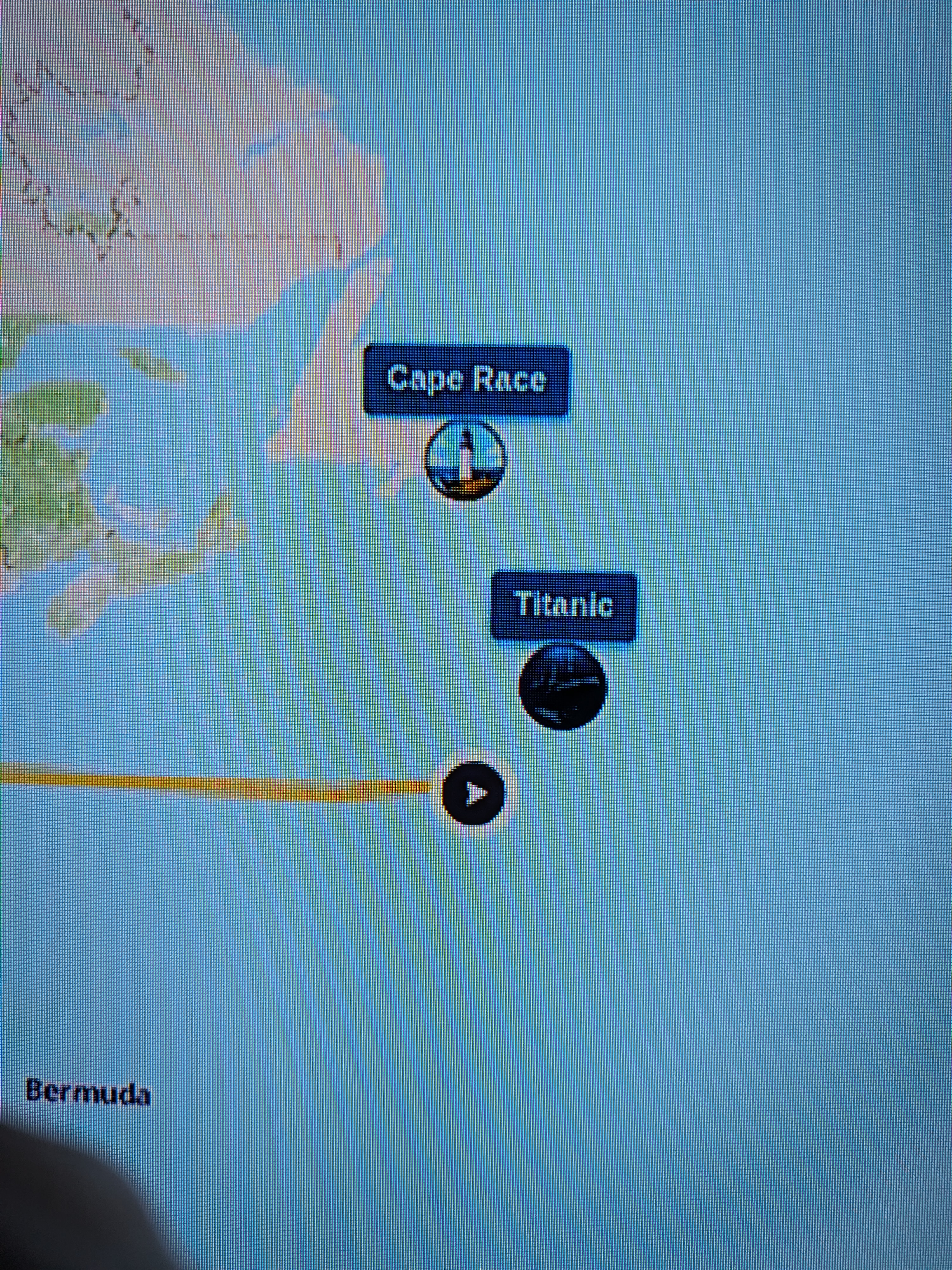
Sunday, 10 May 2026 (Day 3)
Time Zone: UTC-2
Sunrise: 5:59 am
Sunset: 8:39 pm
Once again we have breakfast served to the room. (This will remain our daily pattern.) Today I have the Mediterranean breakfast that L had yesterday: a frittata with ricotta, spinach, tomatoes, and onion, accompanied by a seemingly boiled, mushy vegetarian sausage.
We’re never quick to start the day. This morning, L wants to attend the maritime church service at 10:00, and I would join her if I didn’t feel an urge to get out onto the deck and into the sun after spending the morning in the stateroom. After dropping off L at the theater, I find a lounge chair on the stern side of deck 12 and write for half an hour. At 11:00, I find LP back in our stateroom, and we go together to the starboard side of deck 7 and lounge in the sun for twenty minutes before heading inside.
We decide it makes sense to start lunch early since the clock is going to move ahead to 1:00 pm at noon. After yesterday’s peripatetic lunchtime ordeal, we want to go somewhere we will be assured of finding something reasonable to eat quickly, away from the crowds, and we succeed this time with the Carinthia Lounge. The white shades obscuring the service counter are raised at 11:30, and we are the first ones to select from the shelves of plated food. L gets one with hummus and vegetables, and I get a seafood platter that includes smoked salmon, cod salad, shrimp-crab salad, and chunks of mackerel, and an Asian green salad. We both have a date-nut bar for dessert.
After lunch, we climb stairs to the top of the ship, deck 13. It’s windy and sunny. I take photos of various navigation devices. We proceed down more stairs to the middle of the top deck, where there is WINCH ONLY in large letters with a yellow bullseye in the center. On either side of the sign are shuffleboard courts. L sits on one of the benches running along a wall on the bow side of the courts, where there is little wind. A man walks up to her. “Are you hear for the quoits lesson?” I walk over to them. He explains that a quoits lesson was scheduled for 1:00 on deck 12, but no one seems to have shown up. The man sits down, and we talk. He has been on forty-seven cruises, and he asks us how many we’ve been on. Lisa says it’s our first. “First transatlantic passage?” “No, first time on a ship.” “Oh!” he says, not quite believing that could be true. He continues at length (for which he apologizes repeatedly) about the various types of cruises and ships and asks us (“if you don’t mind saying”) if we are “with Britannia, Princess Grill, or Queen Grill,” a distinction I wasn’t aware of, since L selected the room. I later learn that this is a delicate question, because the charges are different for the three levels of accommodation. We’re in the cheapest, Britannia, as he is. Having been with the Princess Grill on a past crossing, this is a new experience for him. He’s found the food in Britannia to be good (as we have, though we have nothing to compare it to).
A man and woman appear from around the corner and start playing shuffleboard. Our new acquaintance, who has introduced himself as Andrew, knows this couple, and shouts out to them. They return the greeting, and when Andrew says that he was looking for the quoits class, they say that’s where they just were. It was around the corner, where a quoits court (such as it is) is painted on the deck. Andrew suggests we join the couple for some shuffleboard, and they delicately and deftly observe that there’s an unused court. Perhaps we could play there. (This exchange leaves me wondering how well Andrew knows the couple.) So Andrew patiently teaches us shuffleboard. For me, it is a refresher, since I logged many hours on shuffleboard courts in Daytona Beach in my teens. Based on my winning game against Andrew, I might succeed as a shuffleboard hustler.
Late in the afternoon, we walk to the Illuminations Theater for a history of the Cunard line presented as a four-person radio play with slides.
Tonight is the first of two galas. The theme is “Red and Gold.” When planning for our trip, Lisa was adamant about not participating in anything that required dressing up. After a couple of evening meals with C and G, though, she is loath to miss a meal, and she says we should go. There is a dress code that requires a tie and jacket. Fortunately, I packed a jacket, but I have no tie, and it isn’t clear where on the ship where I could borrow—or buy—one.
While thinking this over as we sit in our stateroom, my eyes land on the red six-foot USB-C cable I brought to charge my phone. After fussing with it for fifteen minutes, I manage to fashion a string tie of sorts from it. I tuck the business ends of the cable into my shirt. At the dinner, many women wear bespangled dresses, and most of the men in tuxes wear shirts with crisply pressed wing collars adorned with colorful bow ties. I don’t reveal my USB cable hack to the others until the end of the dinner.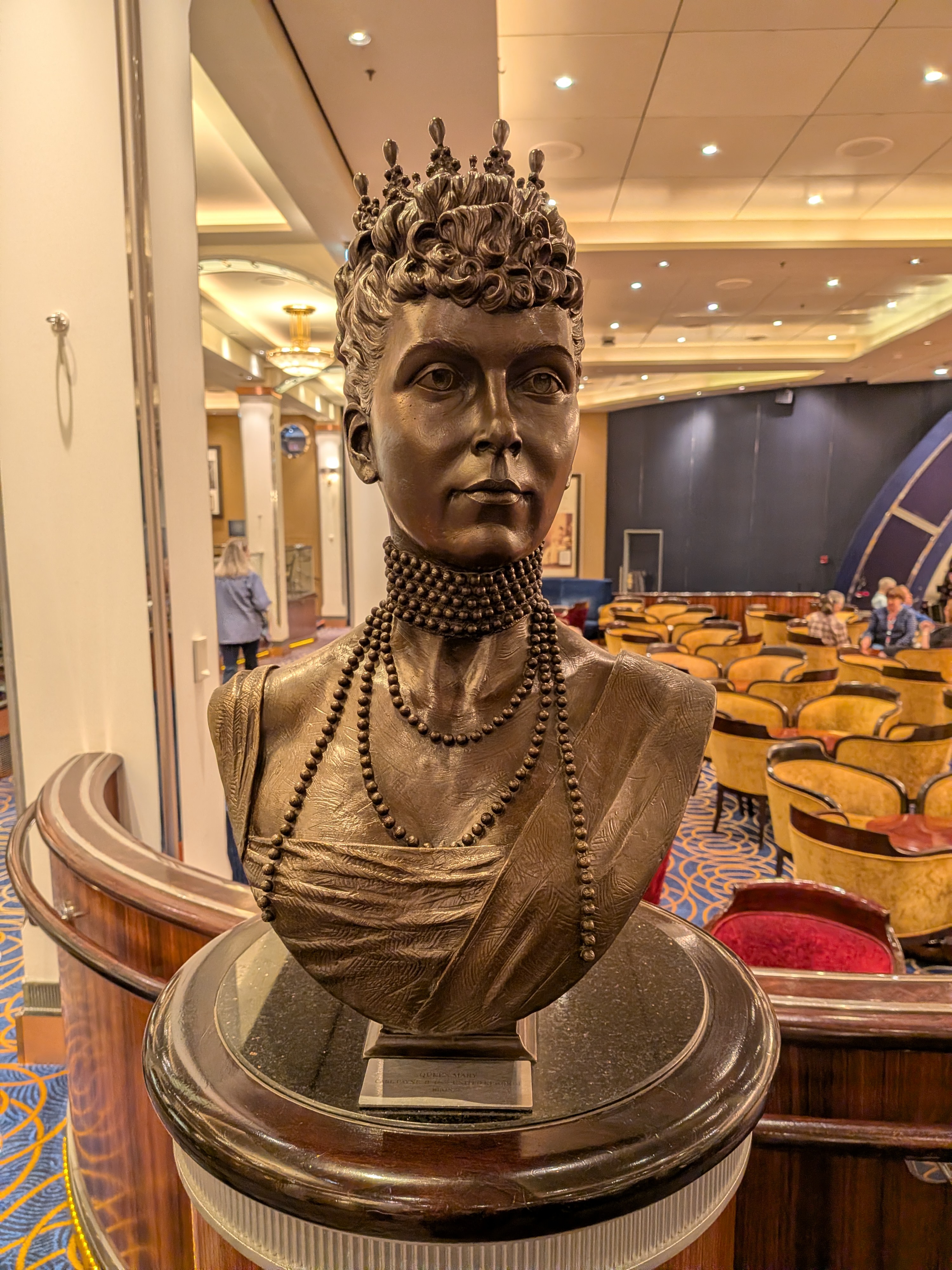
Monday, 11 May 2026 (Day 4)
Time Zone: UTC-1
Sunrise: 5:49 am
Sunset: 9:04 pm
I wake in advance of the alarm again and read ten pages of Matrix. This morning I have the “American Breakfast,” which is American in all aspects but its small portion size, and that’s fine with me. L didn’t sleep well last night, and she ends up spending the morning and early afternoon in bed. I return my two books to the library and pick up the daily sudoku, which, I realize when I’m back in the room, has two 5s in one block of nine and is unsolvable. I browse the bookstore, which offers mostly popular paperbacks. I see a small, handsome history of the Queen Mary 2, and I buy a copy for L. While walking around the ship, I listen to the Emil Gilels–Carl Reiner recording of the Brahms Second Piano Concerto. When I return to the room, L is asleep. I do Duolingo (I’m working on the chess module, having finished Italian) and read more of Matrix. When L wakes up, she isn’t interested in lunch, so at 11:30 I return to the Carinthia Lounge, where the offerings are identical to yesterday’s. I have the seafood plate again, with the Asian green salad and a date bar.
At noon, the captain announces over the PA that clocks are moving ahead one hour to 1:00. (We will do this every day except Tuesday.) We’re now at UTC-2, the same time zone as South Georgia and the South Sandwich Islands. I make a quick circuit around the exterior of the boat on deck 7, and as I weave my way through the King’s Court buffet on the way back to the room, the captain is back on the PA: “I’m sorry to announce we have a medical emergency.” I assume there has been a diagnosis of a case of hantavirus and we will all have to quarantine in our cabins, but this turns out to be a different kind of emergency. A passenger is in need of a blood transfusion, and the captain asks passengers with blood type O+ who can document it with a donor card to go down to the medical center on deck 1.
L, who has spent most of the morning and early afternoon in bed, revives herself in the afternoon in time for high tea at 3:30. When planning the trip a few months ago, she said she wanted to have tea every day, but other activities, fatigue, and concerns about eating too much before dinner have dashed those plans. Today she had no lunch and has worked up an appetite. When we’re seated near the back corner of the large ballroom, the seats are nearly full, and the resident guitarist–singer, Paul Garthwaite, is playing his custom-made 22-string guitar, which resembles a lute. Three or four servers circulate on our side of the ballroom, offering tea, finger sandwiches, scones, and desert pastries. We both have tea. L loads up on finger sandwiches and scones, and I limit myself to a single smoked salmon roll and a scone. Half an hour into the tea, a waiter approaches us and asks whether we’d mind company. The woman is an young accountant who does the books for several Boston-area biotech firms and works remotely. She’s meeting a friend in London and then spending two months in Europe. L eats robustly, knowing she’ll be skipping dinnertonight.
I show up alone at table 409 at 6:00 pm, and M and B are already there. They tell me about a comedy show they attended in the afternoon that B in particular had enjoyed. As we continue talking, I feel impatient and a bit panicked that G and C might be skipping dinner, but they walk up to the table at 6:10. They tell us they went dancing again last night and spent much of the day reading. Conversation is far-ranging, but one topic we have steered clear of since the first night is politics. I suspect B and M might not share our political leanings. (It was clear pretty quickly at our dinner on the first night that G and C do.)
I get back to the room at 8:00 pm and fill in L on what I can remember of the evening’s conversation. She is feeling a bit peckish, so at 9:00 pm we walk upstairs to the King’s Court buffet, and she assembles a sandwich from two slices of rye and cold cuts. I select two pieces of sushi and slices of salmon and tuna. We sit in one of the windowed alcoves to eat. We’re back in the room by 9:30 and start preparing for bed. As I’m filling out the breakfast card for tomorrow, L surfs the TV channels and lands on the opening credits for Namesake (2006), directed by Mira Nair, the mother of Zohran Mamdani. “I’d like to see a bit of this. Not all of it,” she says. We end up watching it to the end and turn out the lights after midnight. I end the day exhausted and a bit cranky.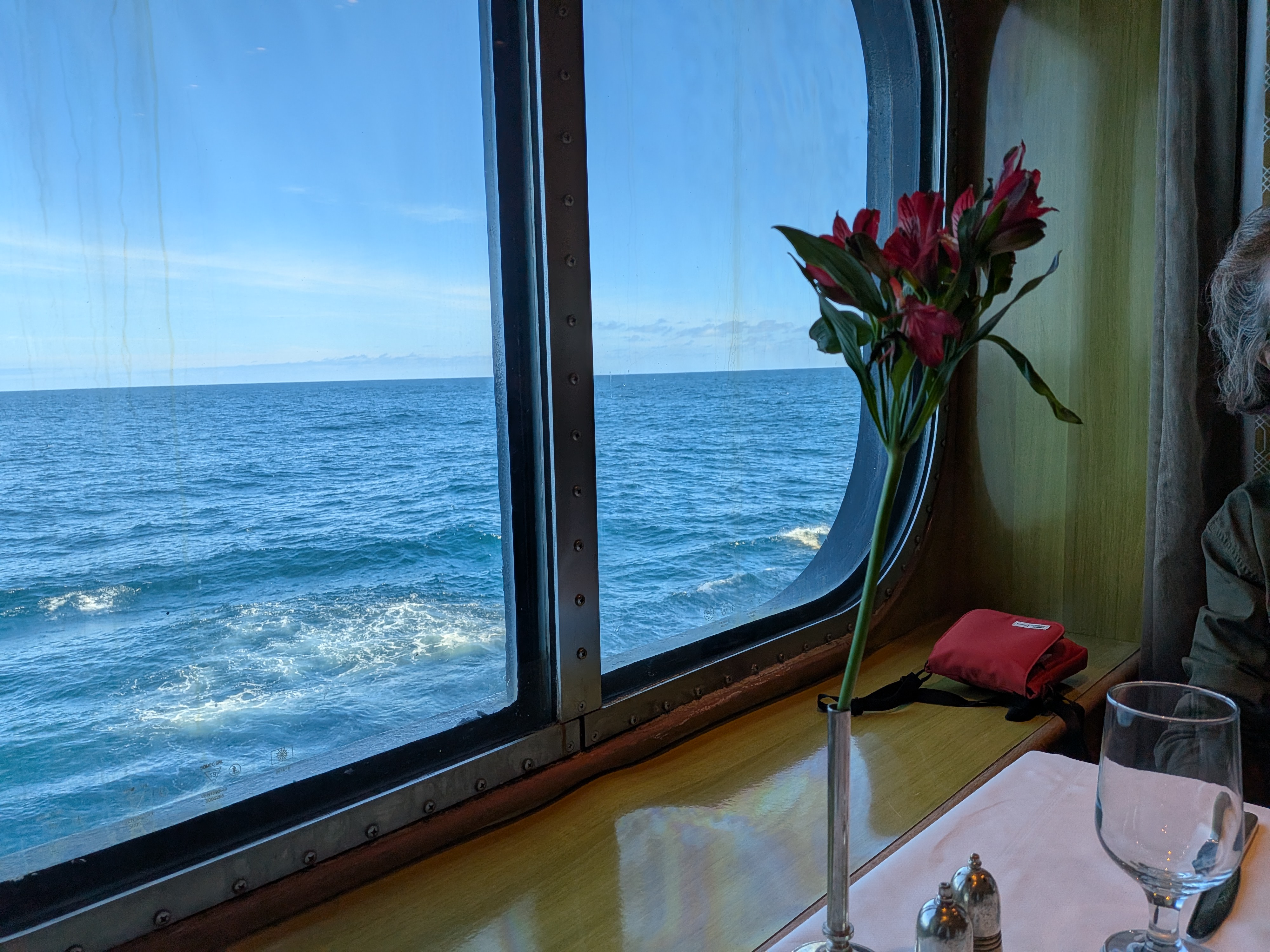
Tuesday, 12 May 2026 (Day 5)
Time Zone: UTC-1
Sunrise: 5:55 am
Sunset: 8:26 pm
The alarm on my phone goes off at 7:00, and I’m asleep and groggy, so L gets out of bed to turn it off. Breakfast is delivered at 7:30, and today’s reprise of the English breakfast is cold, as is the plate. None of this improves my mood.
At 9:30, we walk down to deck 3 to go through a mandatory UK immigration interview. The line is long and extends about two hundred yards down the main corridor, past the elevators. It moves fairly quickly, and within twenty minutes we’ve reached the front. The UK immigration officer flips through our passports, compares the photos to what she sees standing before her, and asks how long we’ll be in the UK. It takes all of thirty seconds, and we’re off.
At 11:00, we attend a lecture by English journalist Rageh Omaar, formerly of the BBC, that is broadly organized and loosely presented. We leave when the Q and A starts and go out in search of lunch. The counter in the Carinthia Lounge, which opened at 11:30 the previous two days, is closed when we arrive at 11:40, and a sour waiter tells me it won’t open until 12:00. We move on to our standby, the Britannia Room, where we had a quick, small lunch a couple of days ago. The room is nearly empty when we arrive, and we’re seated at a table next to a window looking out onto the ocean. A few minutes later, a couple is seated at the two-top only inches away from ours. They are retired Canadians. He had been an elementary school teacher, and she had done clerical work in the court system. We talk of many things, and once it becomes clear we aren’t pleased with what’s happening in the US, everyone does a bit of venting. They are from Hamilton, Ontario, and have valuable suggestions for our planned month in Kingston, Ontario, in July.
The lunch service is slow, which is OK, since we’re enjoying our conversation. We learn they are named Eleanor and Murray, and their grandchildren refer to them as “Elmur.” They want to catch a 1:30 event, and dessert doesn’t arrive until 1:25, so they finish and dash off.
At 2:30 we attend a recital of Chopin piano music performed by Tyler Hay. I am skeptical at the outset when it becomes clear that Hay will be speaking between each piece, but his playing is accurate and tasteful. The highlights of the program are the “Raindrop” prelude (op. 28, no. 15), the Fantaisie-Impromptu (op. post. 66), and the B-flat minor Scherzo, op. 31.
After the recital, we make a loop around the ship on deck 7 before heading to the Royal Court theater for a well-prepared lecture on Quentin Blake, the illustrator of most of Raold Dahl’s books. I leave the lecture early to head over to the Golden Lion Pub for an installment of a program billed as “The History of the Guitar,” presented by Paul Garthwaite, the performer on the 22-string acoustic guitar yesterday during tea. When I walk into the pub, he is tuning up a blue Stratocaster, and I scan the room for an open table near the small podium, but all the seats are taken. I settle on a barstool about fifty feet to the right of the guitarist. A few minutes later, he fires up a backing track and starts playing the scratchy chordal riff from Pink Floyd’s The Wall. Speaking over the music, he announces that today’s installment of “History of the Guitar” will focus on Pink Floyd, and that’s fine with me. He says he’ll be playing and talking about tracks from Dark Side of the Moon, The Wall, and Wish You Were Here, but I have to leave for dinner after thirty minutes, so all I hear are “Brain Damage,” “Us and Them,” and “Money” from Dark Side. For each song, he gives some background and demonstrates what happens in them musically.
At one point he says, “Sorry, I have to mention this when I see it. Out the window are some porpoises.” I look at where he’s pointing but can’t see them. “Let’s see if I can call them.” He plucks a high note and runs his left hand up and down the fretboard, letting the note glissando, up and down. I leave during the solo for “Money,” go back to the stateroom, and get dressed for dinner. No USB cable around my neck tonight, but I do wear a sports jacket. As L and I walk down staircase C to the Britannia Room, I can hear clearly, coming from down the hall, the famous second guitar solo from “Comfortably Numb” from The Wall, which means he still has Wish You Were Here to cover.
We have another entertaining dinner. When we arrive, C and G are already seated, but they have decided to switch things up by changing places, and we do the same. When M and B arrive and sit in their usual places, we are arranged boy-girl around the table.
After dinner, L and I take the stairs to deck 7 and make several circuits (1/3 mile for each) as the sun sets. The cloud cover remains heavy at night, and we see no stars. At this point of the crossing, we might finish without seeing the stars in a clear night sky.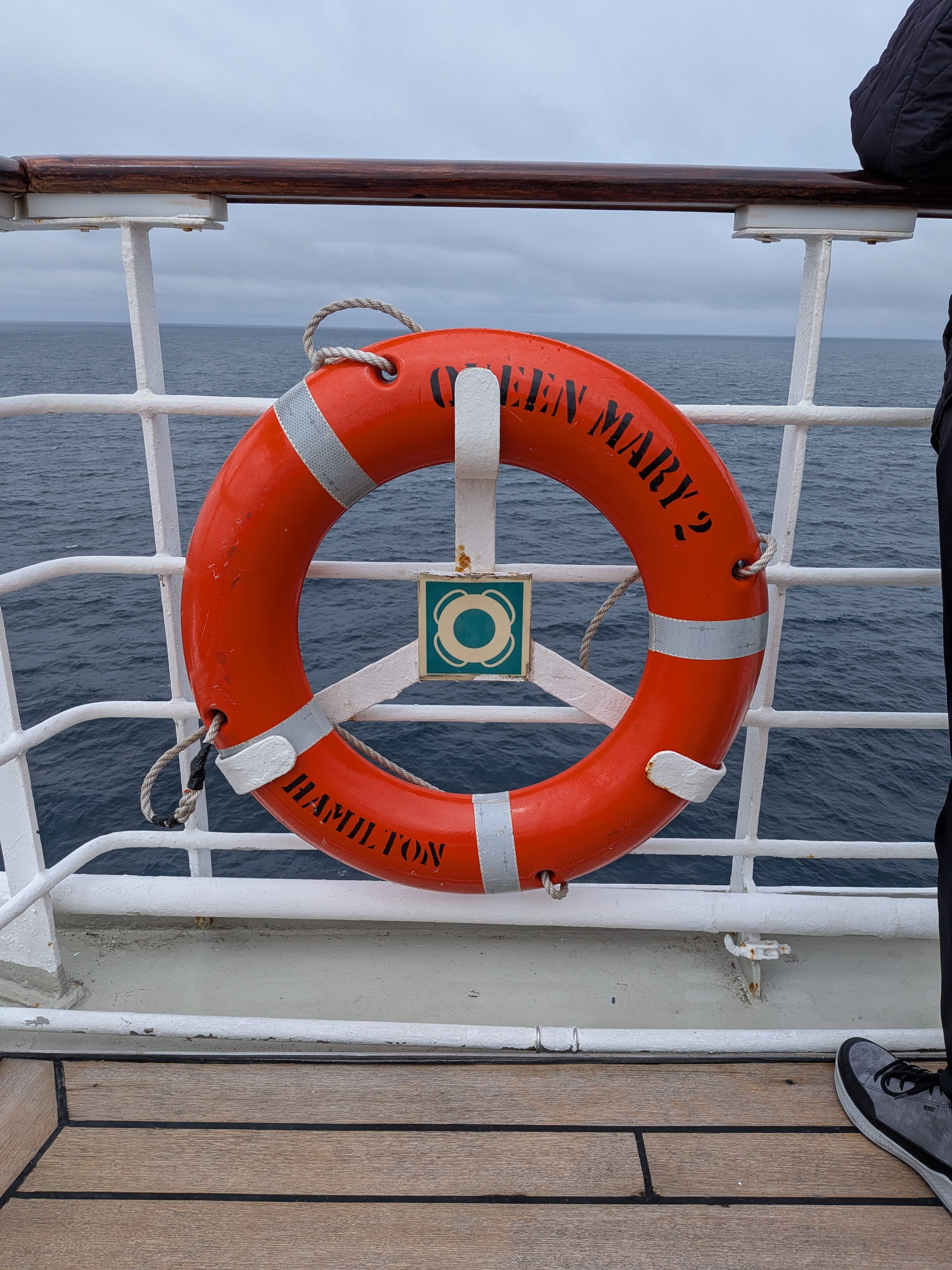
Wednesday, 13 May 2026 (Day 6)
Time Zone: UTC
Sunrise: 6:01 am
Sunset: 8:39 pm
There is far more pitching and rolling today, and it will worsen through the day, into the evening, and over night. This morning I scale back on breakfast: a bagel and fruit with granola. After breakfast, I complete a lesson on Duolingo, preserving my seemingly important five-year-plus streak, then, feeling a bit squirrelly, I walk down to the shops on deck 3 in search of a tie to wear to this evening’s gala, not wanting to subject our table to another USB-cable string tie. The shops are mostly outlets for high-end stores offering jewelry, watches, and perfumes, so I expect to find ridiculously overpriced name-brand formal wear accessories, but the ties I come across are reasonably priced, and I find a $16 white bow tie that will contrast well against my black shirt. (With the exception of a couple of light-blue Oxford shirts, all the shirts I brought are black—just to make color coordination simpler.) The shop also offers tuxedo rentals, and while I look over ties, a man is trying on a series of tuxedo jackets in search of a good fit.
Tonight’s gala is a masquerade event, and outside the shop is a table with an array of Carnevale-style, bespeckled, hand-held masks. When I return to the room, I report this to L, and later in the day we will return to the table and thankfully not buy anything. After leaving with my bow tie, I walk toward the prow of the ship, through the packed Carinthia Lounge, to staircase A, which I take up to deck 8, where I pick up today’s sudoku in the library, and then up to deck 9 to scope out the Commodore Club, a bar that wraps around the prow of the ship, with good sightlines of the ocean through windows along the perimeter. It has dark, smokey feel—without the smoke, although as I walk out I see the glassed-off Churchill Room to my left, a cigar lounge.
L dresses in the late morning, and at 11:30 we walk to the Carinthia Lounge, which has become our go-to for a quick lunch. The time moves ahead another hour at noon, and we’re now at UTC–1, the time zone of Iceland. I eat the usual plate of seafood and seafood salad and a kale salad with edamame and peanuts. After lunch, I take L up to the Commodore Club so she can see the venue for tonight’s jazz trio. As we enter, she’s struck by the quiet and the bar’s fancy decor. “Are we allowed in here?” she whispers. A woman sitting with close to the entrance hears her. “Everyone is allowed here, but fortunately only a few have found it.” She is Penny and behind her is her mostly silent husband, Barron. She tells us they live in Maryland, although I can tell from her speech that she must have grown up in England. (I have to wait some time to hear Barron speak and determine he’s from the US.) Penny is pleasant and chatty, and we discuss what has been good and bad about the ocean-liner experience. They are on their way to Devon, where they own a house, which they use only in the summer. Penny asks about our plans post-crossing, and when we mention Scotland, she says they’ve never been, although Barron is a golfer. After ten minutes, Barron begins reminding Penny that lunch service is ending soon, and five minutes later he manages to succeed in getting them headed toward the buffet. They leave half-finished beers on the table.
Having spent the morning in the stateroom, L is eager to get out, and we walk a full three circuits—one mile—around the deck. It is cold (58°F) and blustery, and I am underdressed. Still, it’s good to get out. On our way back to our room, we cross paths with an older couple, and something the man says to no one in particular provokes a good-humored response from L, and, as has often happened on this trip, her simply responding is perceived as an invitation to converse. The man starts in with us, and his partner, who knows from experience that he will be talking awhile, says she’s going on. We then hear, as we stand on the landing of a stairway, about his move from the city to upstate New York; his cats; his eightieth birthday, which could have been celebrated with a party (“We could have had fifty people, easily”), but there would be no place to house them in the wilds of upstate New York—and a guest might let out one of the cats, who could become the prey of a woodland bobcat. And so the monologue continues. He is artist Brook Larsen, retired—only two years ago—from the School of Visual Arts in New York City. When it becomes clear we would need to be the ones to end the conversation, I wait for a pause, and as he briefly considers where to take us next, I say, “Well, it was a pleasure meeting you,” and we escape.
At this evening’s gala, C and G switch up the seating again, taking the seats that M and I had the previous night, and when I ask if we should continue the boy-girl alternation, G says, “L, why don’t you sit here. I haven’t had a chance to sit next to you. M and B arrive, and B sits next to me, and M next to C. We begin the evening talking in pairs. L is thrilled to be talking to G, and it is good for me to chat with B, who I am concerned might have felt at last night’s meal that I’d been snobbish with my views about classical music and my knowledge—such as it is—of Italian. He’s a lively, talkative man of Italian heritage, an enthusiastic fan of Yuja Wang (perhaps for different reasons than I am), and a sports fan. When he asks C how many books he has written, and C says fifteen, B is quiet for a second then shakes his head. “I don’t think I’ve read fifteen books.” C asks L and me what we plan to do this evening. “We’re planning to hear a jazz trio in the Commodore Club. It starts really late, though. Nine o’clock.”
We return to the room and review the tomorrow’s Daily Programme, which is left on our bed each night during dinner. When P realizes the jazz trio will be playing at afternoon tea tomorrow, she decides not to go to the Commodore Club. And it’s too cold and windy for a postprandial walk. Instead, I write postcards to my nephew and niece in Pennsylvania and read.
The rocking of the boat intensifies, and by the time we turn out the lights, I feel as if I’m lying on a playground merry-go-round being spun slowly. It takes both of us a while to fall asleep, but once I do, I sleep well.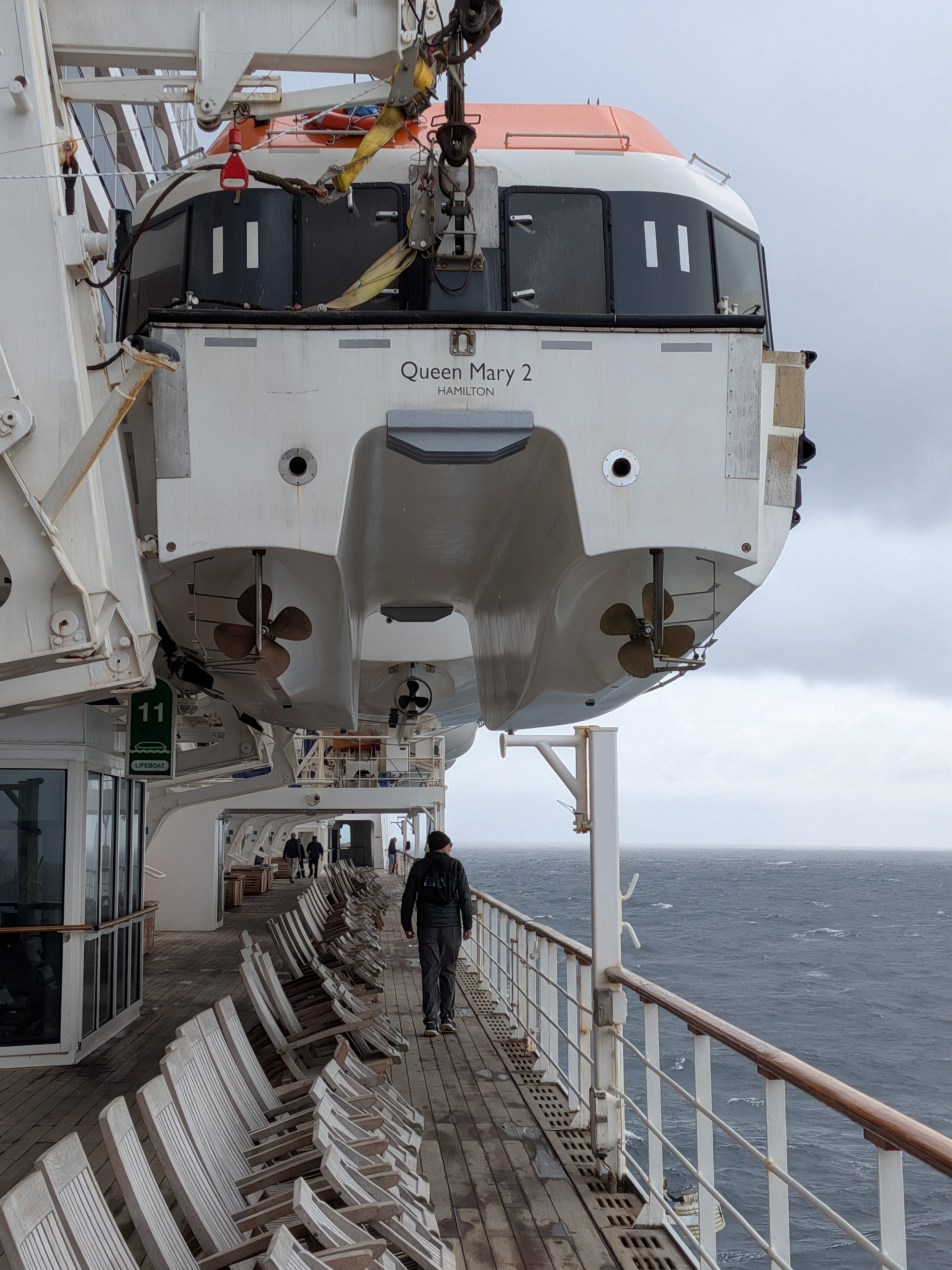
Thursday, 14 May 2026 (Day 7)
Time Zone: UTC+1
Sunrise: 6:08 am
Sunset: 8:53 pm
I wake up fifteen minutes before the alarm goes off at 7:00 am and read a bit of Matrix then post photos to my Instagram story. Breakfast is delivered to the room at 7:30, and I realize I’ve overordered. In addition to the small, though sufficient, American breakfast (bacon, eggs, waffle), I ordered a bagel and cheese. L ends up eating half the bagel and cheese later for lunch. After breakfast, I dutifully complete a lesson on Duolingo, catch up on writing this narrative, and begin feeling restless. I decide to walk the postcards down to the purser’s desk, where there is no line. It costs only $3.20 to send two postcards to the US, which is cheaper than it would cost to send them from the US to the UK.
While I walk back, the captain announces over the PA that a helicopter is on its way to the ship to evacuate a passenger. A few days ago, he called for volunteer blood donors to help this passenger. Someone at our dinner table went down to give blood and told us that donors needed to have a donor card confirming blood type and could not have drunk alcohol in the past twelve hours. And the younger the better. There were plenty of donors, and they ended up not needing her.
For the helicopter evacuation, all public decks are closed, and we are told to stay off the balcony of our stateroom. “Photography is strictly prohibited,” the captain says. We are updated when the helicopter is twelve minutes away, and we can hear it—the first aircraft we’ve heard since a series of low-flying helicopters passed over us as we left Brooklyn. C and G report in the evening that they talked with someone on a higher deck who said the helicopter circled the ship several times before landing on the sundeck. Half an hour later, the captain is back on the PA to tell us the evacuation is complete. We never learn what caused the passenger to need blood and be evacuated.
In the afternoon we attend the second recital by Tyler Hay, and it is an ambitious program: Beethoven’s “Appassionata” Sonata (op. 57), Debussy’s “Claire de lune,” and the solo piano version of Rhapsody in Blue. The last two pieces are crowd-pleasers, but the first is a surprisingly bold choice—a long and challenging work for many listeners. Once again, I am impressed by his nearly perfectly executed, tasteful performance. The Beethoven is among his most difficult of his piano sonatas. Given the audience, I expect applause at the end of the first movement and am surprised by the silence.
Throughout the first movement, and continuing through the concert, people wander into the hall searching for seats and, when they find one, they shuffle down the aisle in front of people to sit in it. During Rhapsody in Blue, we hear music and applause from another venue drift through the open doors at the back of our theater. Allowances have to be made for performances on a ship.
After the fifty-minute recital, we walk to the ball room at the stern of deck 3 for afternoon tea at 3:30. The jazz trio we were planning to hear last night is performing. An older man is seated at our table, and when we learn he lives in Knoxville, we have a lot to discuss, though he’s not much of a talker. He grew up in New York and before retiring had worked for Walmart setting up new stores around the country. L is pleased to learn he follows the Lady Vols.
The jazz trio isn’t very interesting—straight-up, piano-heavy renditions of standards, with little improvisation. We leave at 4:05 to see whether we can see the lighthouse at the southeastern tip of Great Britain that the captain mentioned this morning in his report. When we arrive on deck 7, there are people lined up along the rail, port side, trying to see it, but the clouds are low on the horizon, obscuring the view.
We have been looking forward to dinner tonight. B and M told us last night they would be busy packing this evening and would skip dinner, so we will have another opportunity to talk with C and G on their own. We both have topics lined up. When we arrive, they are seated at opposite sides of the eight-foot table. “Are you having a fight?” I say. “No, still trying to mix things up,” says G. We end up sitting clustered on one side: C, me, G, and L. The waiter stops by and asks about the other couple, and Lisa explains they won’t be at dinner tonight. I offer to get a bottle of prosecco for the table as a modest celebration for this last dinner.
Soon after the prosecco is served, our waiter walks up to the table accompanied by George, a spry, 80ish Scotsman who resembles William Faulkner when seen head on (not so much from the side; he lacks Faulkner’s sharp, Roman nose). What can we say but yes, and with that yes, it’s clear the evening will be something different than we’d hoped. A few minutes after George is seated, the waiter returns to the table with an older British woman, Barbara. They are both interesting and entertaining, but L and I are sorry not to have spent the meal talking alone with our friends.
We pack when we return to the room. As I look over the documents I’ll need for tomorrow’s car rental—passport, international driver’s permit, reservation details—I see on the inside of the license: “Your valid U.S. driver’s license must accompany the IDP at all times.” I read it twice. I intentionally left my Pennsylvania license at home because I’d assumed the international license was sufficient on its own. As I page through the license, I can see there are no details on date of birth and address, so it’s in fact worthless as an ID. I begin panicking: Hertz won’t let me rent because I have no license. Maybe that will be OK, because L can rent the car. But I won’t be able to drive—at least not legally. What will she think of that? What if she forgot to bring her license? What if neither of us can rent a car? How much of the remainder of the trip can we do by train? Not much. What if I have my nephew FedEx the license to me, in Glasgow? Yes, that would be possible. But no, tomorrow is Saturday, and it wouldn’t go out until Monday, and we’re off to the hinterlands of Orkney on Tuesday. The worries and anxieties spiral. I decide not to tell L immediately, because it would keep her up. That night I lie awake in bed with my heart pounding. I eventually sleep, but fitfully, and only for a couple of hours.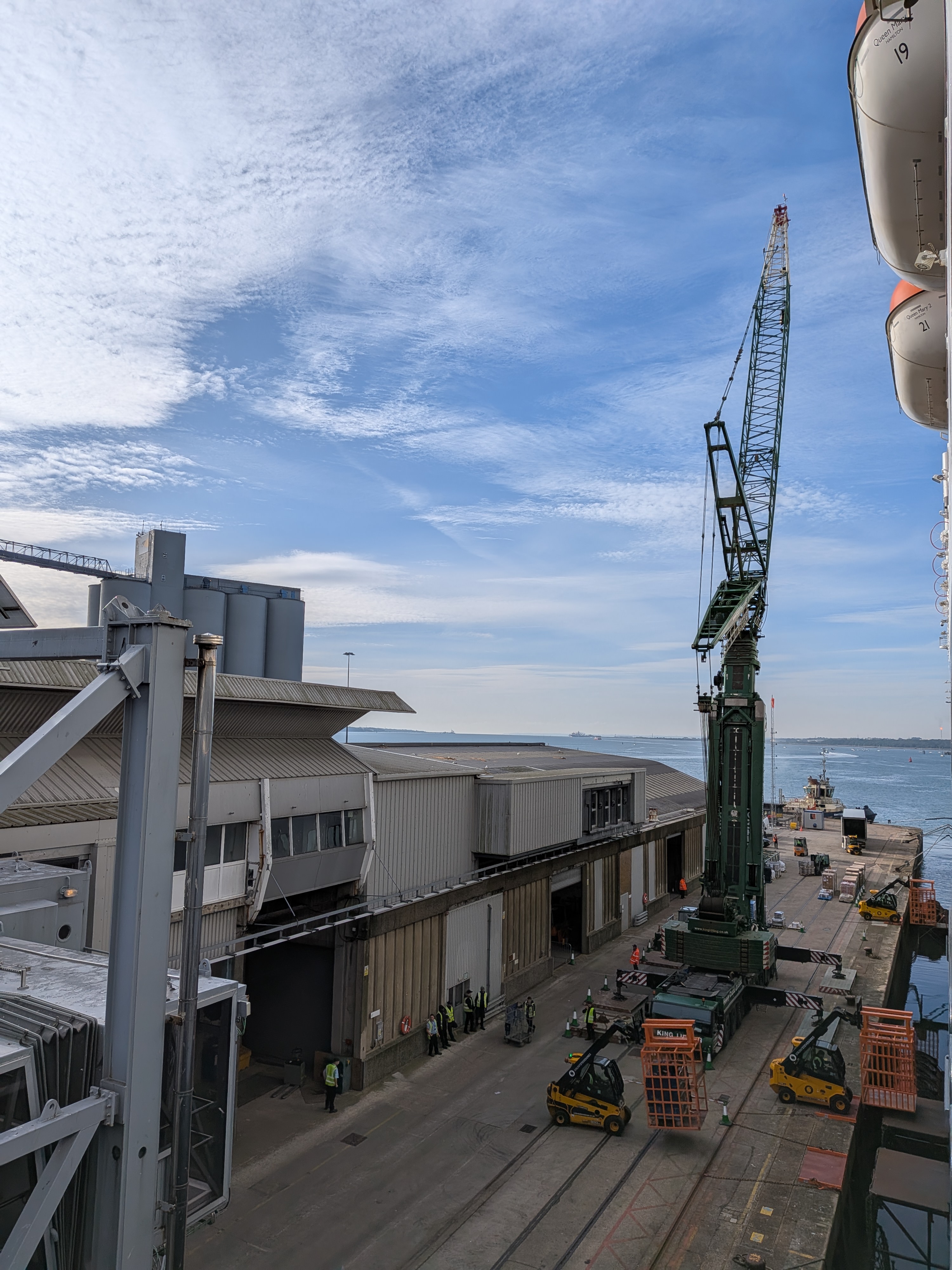
Friday, 15 May 2026 (Arrival)
There is no room service on this last day, so we have to eat in the dining room. “We’ll have to go out hunting for coffee, like animals,” as C put it last night. L asked that the alarm be set for 6:00 so we can have breakfast when the Britannia Restaurant opens at 6:30. When we walk to the dining room, there’s already a line, but it moves quickly, and we’re seated by 6:45. We both have omelets and toast. By the time we are finishing, the dining room is nearly full. I say to L, “I need to tell you something. I made a mistake. When I was sorting through the documents for today, I had the passport and the international driver’s license, but I was looking at it and realized I’m supposed to have my PA license with it, but I forgot it.” “It’s not in your wallet?” “I cleared out my wallet before left and put in only the cards I knew I’d need. Credit cards mostly. I’d thought the international driver’s license would be enough on its own. I do have a photo of my PA license.” “Well, that should be enough.” She isn’t worried. Still, she thanks me for waiting until this morning to tell her.
We have to be out of the room by 8:30 am, and our disembarkation isn’t scheduled until 10:00 am, so we take the elevator to deck 3 and wait in the crowded Sir Samuel’s Lounge. We sit at the bar, away from people. We both order a cappuccino. A passenger picks up a glass of water from the bar and the bottom of the glass breaks off, spilling water and ice onto the bar and floor. She holds the top half of the glass up for the staff to see, a look of disgust on her face as she waits for a replacement. A few seconds later, a passenger slips on the spillt water and falls.
At 9:30 we are called to disembark. We roll our suitcases out and exit from the same door we had entered seven days ago. Once we make it through the terminal, we wait in a long line with dozens of others for a cab. It’s a ten-minute ride to the Hertz office. After spending the night worrying that we’d be denied a rental because I had only a photograph of my driver’s license, it ended up being no problem at all. “I do no checking. I just need the number,” the jaunty employee says. Within fifteen minutes, we’re settling into a dark blue Toyota Yaris and are ready to being our trip to Scotland.